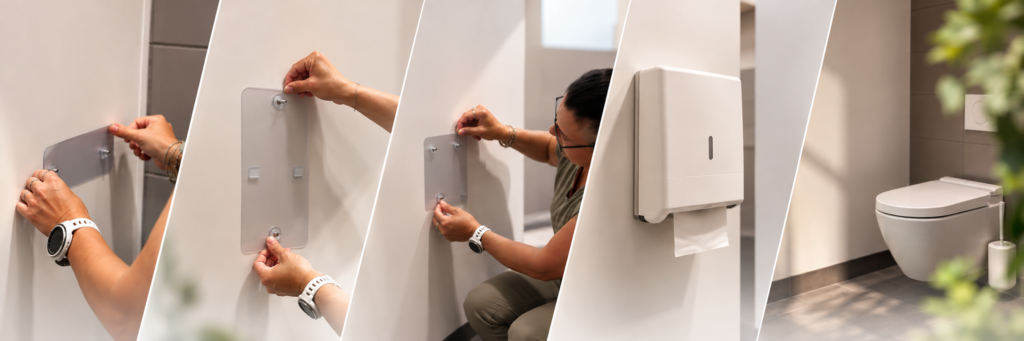
Are you planning to replace soap dispensers, paper dispensers, or other restroom fixtures in your buildings?
Before installation, you should check six things: the existing mounting points, the wall surfaces, potential obstructions, the time required for installation, future replacements, and alternatives to drilling.
By checking these points in advance, you can better assess technical limitations and choose an installation method that is suitable for your buildings.
Below is a practical guide to help you prepare your project, including a concrete example of 86 dispensers that were installed without drilling on the KdG campus in Hoboken.
1. What are the six things you should check before installation?
Use this checklist to identify the specific considerations for your building before selecting new equipment.
| Checkpoint | Questions You Should Ask | Potential risk |
|---|---|---|
| Existing attachments | Do the new dispensers use the same mounting points? | Visible old drill holes, new drill holes |
| Wall surfaces | Is it allowed and possible to drill into the walls and tiles? | Damage to wall coverings |
| Use of the Building | Will the restrooms remain in use during the construction work? | Noise, dust, temporary unavailability |
| Rollout | How many dispensers and locations need to be equipped? | Installation Time and Coordination |
| Future changes | Will the devices need to be replaced or moved at a later date? | New work on the walls |
| Mounting Method | Is installation without drilling possible and compatible? | Choosing an Inappropriate Installation Method |
2. How can you avoid problems with fasteners and surfaces?
Check the mounting points and the type of surface before ordering new dispensers. A unit that meets users' needs may not necessarily be compatible with existing installations.
Existing attachments
A new model may require different mounting points. This could result in:
Surfaces you want to keep
Drilling can cause problems with certain types of tile, delicate wall coverings, or walls that the building manager wants to keep intact.
Our advice: At the same time, check the dispenser model, the mounting method, and compatibility with the surface.
3. How do you minimize disruption in a building that is in use?
The installation method must take into account the people in the building. Drilling can cause noise and dust and may require additional cleaning.
These points are particularly important in:
Before work begins, determine the times when installation can take place and which areas must remain accessible.
4. How do you estimate the time required to replace dispensers?
The total installation time involves more than just mounting the dispensers. It includes all the steps required for each installation.
When drawing up your schedule, keep the following in mind:
The more devices or buildings are involved, the greater the impact of these recurring steps on the organization of the project.
Also keep the following in mind: a mounting method that works today must also allow for future modifications to your plumbing systems.
5. Should you choose a mounting method with or without drilling?
Drill-free mounting can be an interesting alternative when the surfaces and equipment are compatible. The right choice depends on the substrate, the dispenser, and the operating conditions.
| Criterion | Mounting with Drills | Compatible mounting without drilling |
|---|---|---|
| Drill holes in the ground | Required | Avoided |
| Drilling cuttings | Possible | Avoided |
| Noise from Drilling | Present | Avoided |
| Compatibility | Depending on the surface and fasteners | Depending on the substrate and the system |
| Preparation | Marking of mounting points and drilling operations | Surface Inspection and Preparation |
| Future Replacement | May require new boreholes | Depending on the system used |
AddFlex: a mounting solution that requires no drilling
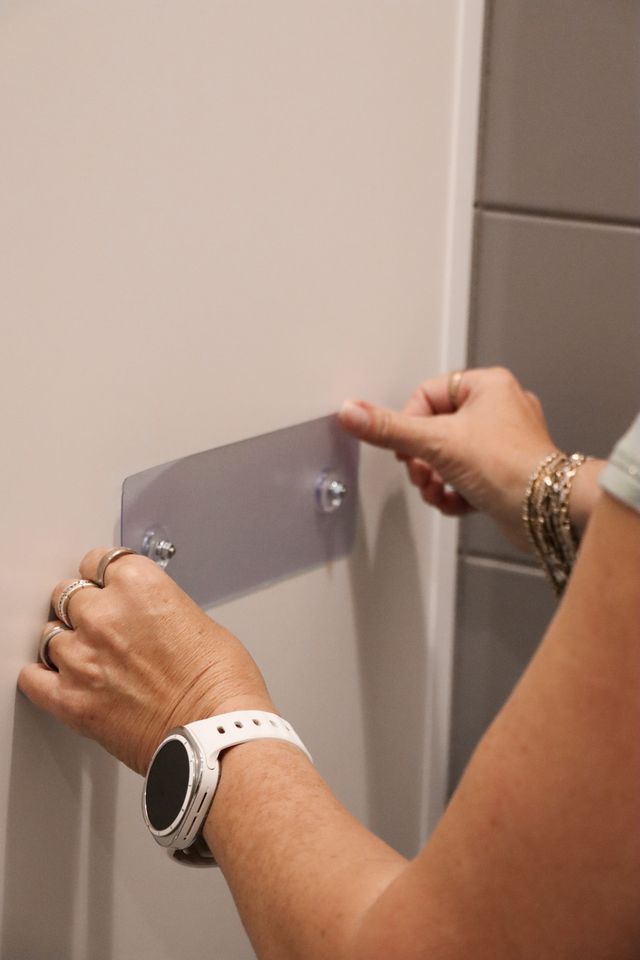
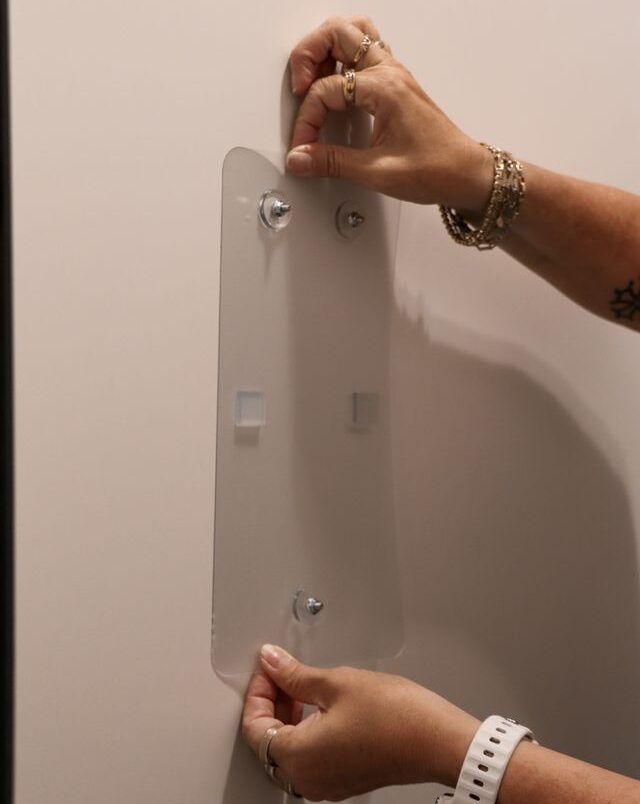
One of the available alternatives is AddFlex, a mounting technology from our partner BOMA that uses numerous micro-suction cups.
For compatible applications, this solution makes it possible to mount equipment without drilling into the surfaces.
However, the compatibility of the substrate must be checked in advance, and the conditions for preparation and installation must be followed.
6. How did Iris install 86 dispensers at KdG without drilling?
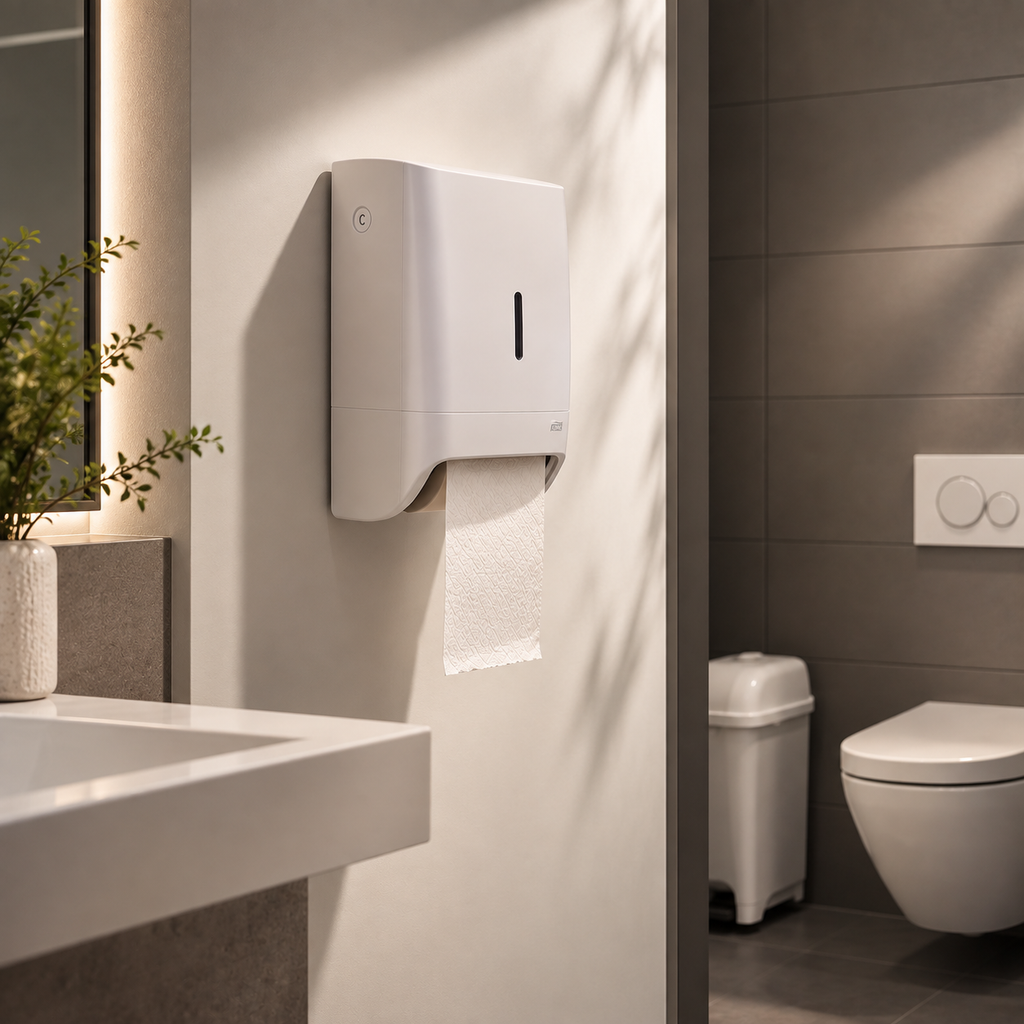
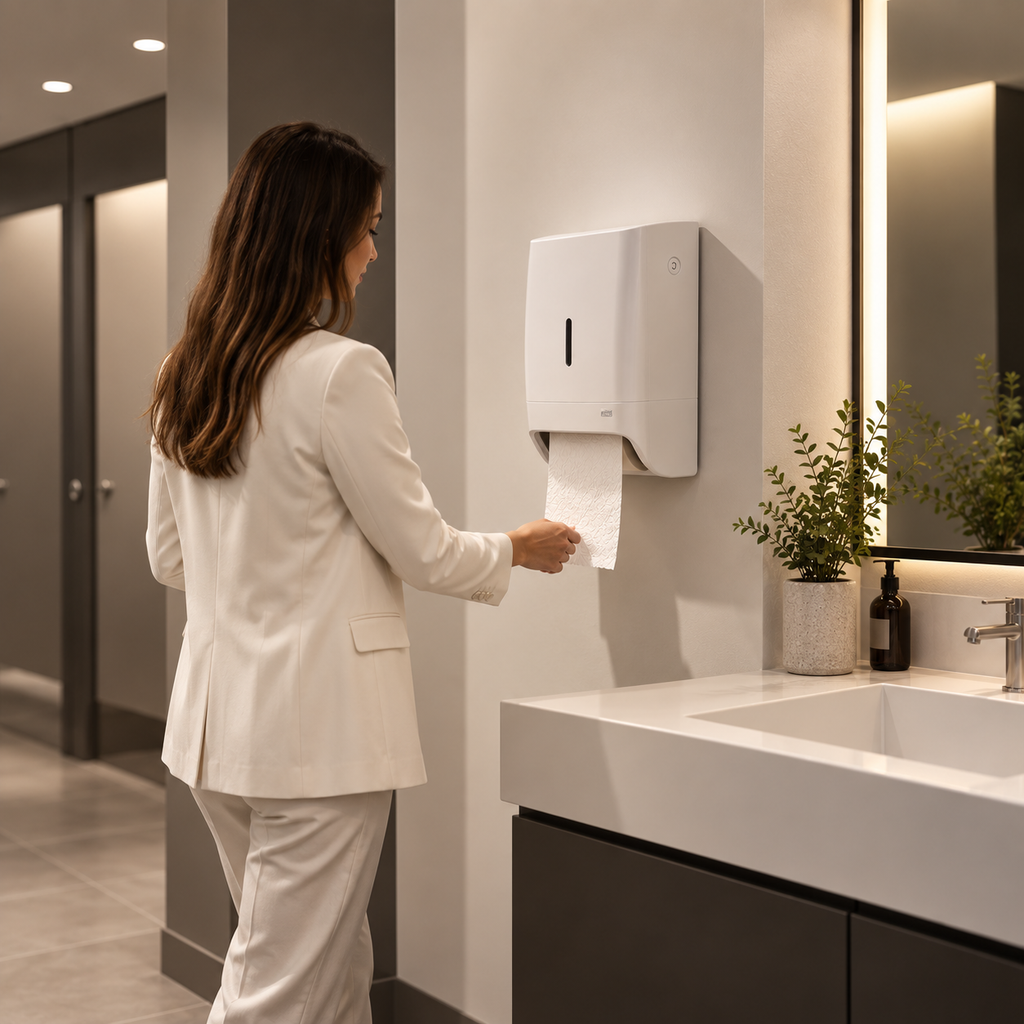
At the KdG campus in Hoboken, Iris, in collaboration with BOMA, 86 dispensers for hygiene products that don't require drilling into the walls.
| KdG Hoboken Project | Result |
|---|---|
| Installed devices | 86 dispensers |
| Method Used | AddFlex |
| Number of drill holes | 0 |
| Partners | Iris and BOMA |
Thanks to the chosen solution, it was possible to avoid drilling new holes and the resulting drilling debris.
This project illustrates Iris's approach: identifying an operational challenge, selecting a suitable solution, and integrating it into the customer's systems.
7. How do you prepare for your next replacement project?
When preparing to replace your soap dispensers, keep these three steps in mind:
1. Planning: Organize the rollout, taking users and future changes into account.
2. Compare: Evaluate the mounting methods based on actual needs.
3. Analyze: Assess the equipment, the surfaces, and the specific limitations of the building.
The right choice, therefore, depends not only on the dispenser itself, but also on its installation, use, and integration into the building.
Are you planning to renovate your bathroom?
Iris will guide you in analyzing the specific areas of concern for your buildings and selecting a solution that is compatible with your systems.
Take contact Get in touch with our teams to discuss your project.